On 21st April 2022, the James Joyce Centre (Dublin) hosted an online conversation between Lucy Brennan Shiel, Susan Leybourne, Marion Byrne, and Clare Hutton, reflecting upon Harriet Shaw Weaver’s important and complex role in the creation and patronage of James Joyce’s Ulysses (1922). Hosted by Darina Gallagher (Director of the James Joyce Centre), the event explored the speakers’ memorial tributes to Weaver in the light of Ulysses‘ 100th anniversary. These included a short film, ‘Weaver of the Wind’ by Brennan Shiel, The Ulysses 100 project e-book by Leybourne and Byrne, and Hutton’s ‘Women and the Making of Ulysses‘ exhibition (showing until 17th July, The Harry Ransom Centre, TX). Watch the full event above.
Author: Web Team
Women and the Making of Ulysses: A History in Ten Objects (Part Four)
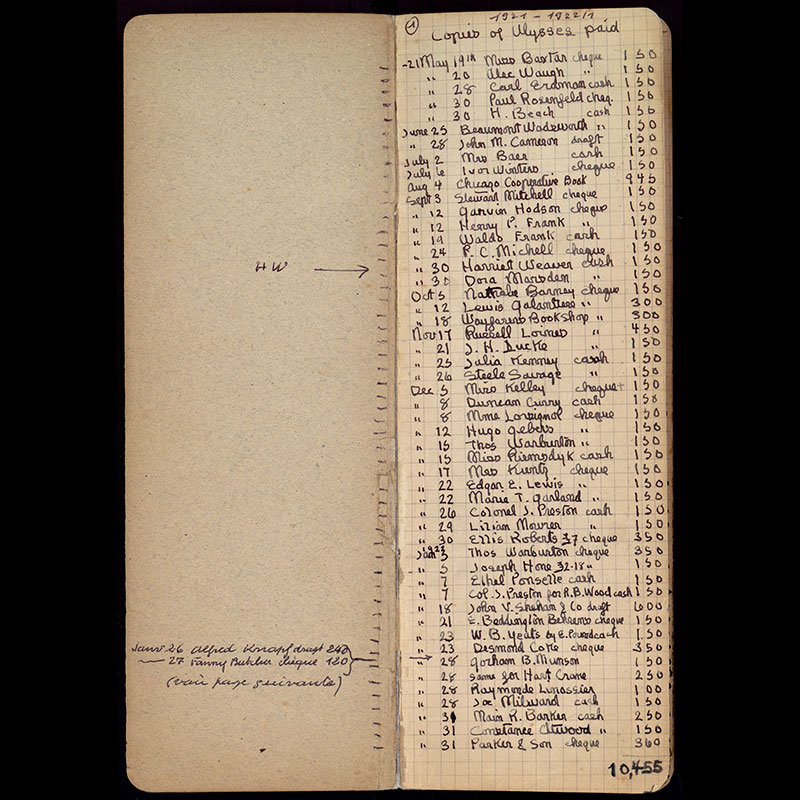
This tiny ledger, meticulously compiled by Sylvia Beach, records subscriptions for the first edition of Ulysses. It serves as a potent reminder of the necessary administrative labor and organization going on behind the scenes at Shakespeare and Company.
Dr Clare Hutton (Loughborough University)
Read the fourth article in a series devoted to objects that tell the story of women who supported James Joyce and the publication of his landmark novel, Ulysses. In this week’s instalment, Clare Hutton (Loughborough University) explores James Joyce’s interactions with Sylvia Beach, who agreed to publish Ulysses at the risk of controversy and personal expense.
Finding Miss Weaver: James Joyce and the Patron of Ulysses (Online Lecture)
Harriet Shaw Weaver (1876–1961) was a noted feminist and littérateur who became associated with Joyce in 1914 when she serialised his work in The Egoist magazine. Independently wealthy, within a few years she began giving Joyce significant financial support in order to complete Ulysses. She also typed and checked manuscripts, undertook to become his publisher in England, and gave other practical assistance, particularly in respect of his health and the support of his family.
Without Weaver’s support, Ulysses might never have seen the light of day. Weaver’s papers are held at the British Library, and are one of the world’s most important Joyce archives. The materials document the emotionally and financially complicated relationship behind Ulysses. This talk by Dr Clare Hutton looks at some of the key objects in the archive and sheds new light on Weaver and the making of Ulysses.
Dr Clare Hutton is Reader in English and Digital Humanities at Loughborough University, and the curator of Women and the Making of Joyce’s Ulysses, a centenary exhibition currently on display at the Harry Ransom Center, University of Texas at Austin.
Women and the Making of Ulysses: A History in Ten Objects (Part Three)
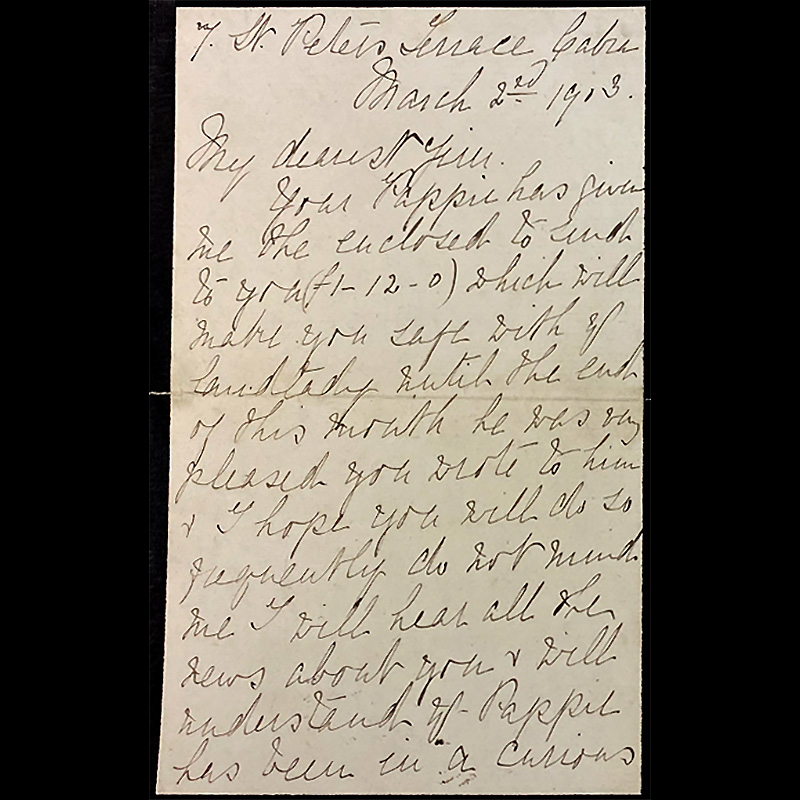
May Joyce was a vivid presence in the life of her eldest son, and was, for a time, the center of his emotional world.
Dr Clare Hutton (Loughborough University)
Read the third article in a series devoted to objects that tell the story of women who supported James Joyce and the publication of his landmark novel, Ulysses. In this week’s installment, Clare Hutton (Loughborough University) explores James Joyce’s relationship with his mother, May, who held together the family and demonstrated unwavering confidence in her son’s creative abilities.
Finding Miss Weaver: James Joyce and the Patron of Ulysses (British Library)
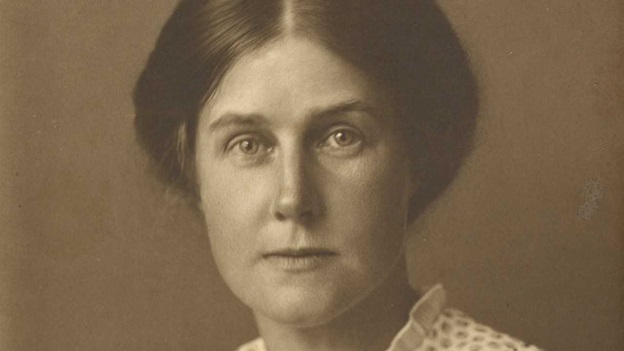
Without Weaver’s support, Ulysses might never have seen the light of day.
Dr Clare Hutton (Loughborough University)
Dr Clare Hutton (Loughborough University) gave a public lecture for the British Library on the 10 March 2022, exploring the relationship between James Joyce and Harriet Shaw Weaver (1876–1961), a noted feminist and littérateur. Independently wealthy, Weaver gave Joyce significant financial support in order to complete Ulysses. She also typed and checked manuscripts, undertook to become his publisher in England, and gave other practical assistance, particularly in respect of his health and the support of his family.
Weaver’s papers are held at the British Library, and are one of the world’s most important Joyce archives. The materials document the emotionally and financially complicated relationship behind Ulysses. Hutton’s talk examined several of the key objects in the archive to shed new light on Weaver and the making of Ulysses.
The lecture complements Hutton’s exhibition at the Harry Ransom Centre, Women and the Making of Ulysses (open now – 17 July 2022).
Collaborators behind the scenes: ‘Women and the Making of Joyce’s Ulysses’ at the Ransom Center
Literary genius is not a solo thing […] Joyce cultivated a view of himself as a troubled artist being thwarted by hapless publishers and difficult material circumstances. The truth is far more complicated. The women behind the scenes really made the achievement of Ulysses possible.
Dr Clare Hutton (Loughborough University)
Read Sightlines magazine’s latest review of the Women and the Making of Ulysses exhibition at the Harry Ransom Center. In this article, Dorothy Meiburg Weller interviews the exhibition curator, Dr Clare Hutton, to discover the complicated truth behind the collaborative creation of James Joyce’s masterpiece, Ulysses (1922).
Women and the Making of Ulysses: A History in Ten Objects (Part Two)
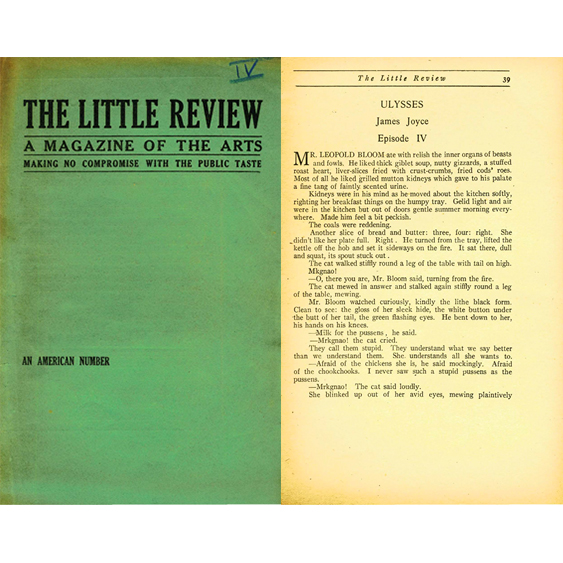
Joyce never visited the U.S. and had little sense that his work was being published by radical lesbian feminists who were committed to free speech, and causes such as anarchism, female suffrage, and non-participation in World War I.
Dr Clare Hutton (Loughborough University)
Read the second article in a series devoted to objects that tell the story of women who supported James Joyce and the publication of his landmark novel, Ulysses. In this week’s installment, Clare Hutton (Loughborough University) explores the determination and generosity of Margaret Anderson and Jane Heap, editors of an avant-garde American periodical dedicated to the publication of Modernist literature. Subsequent blogs will be released fortnightly, each exploring an object significant to the making of Ulysses.
James Joyce’s Women: Sylvia Beach Wasn’t the Only One
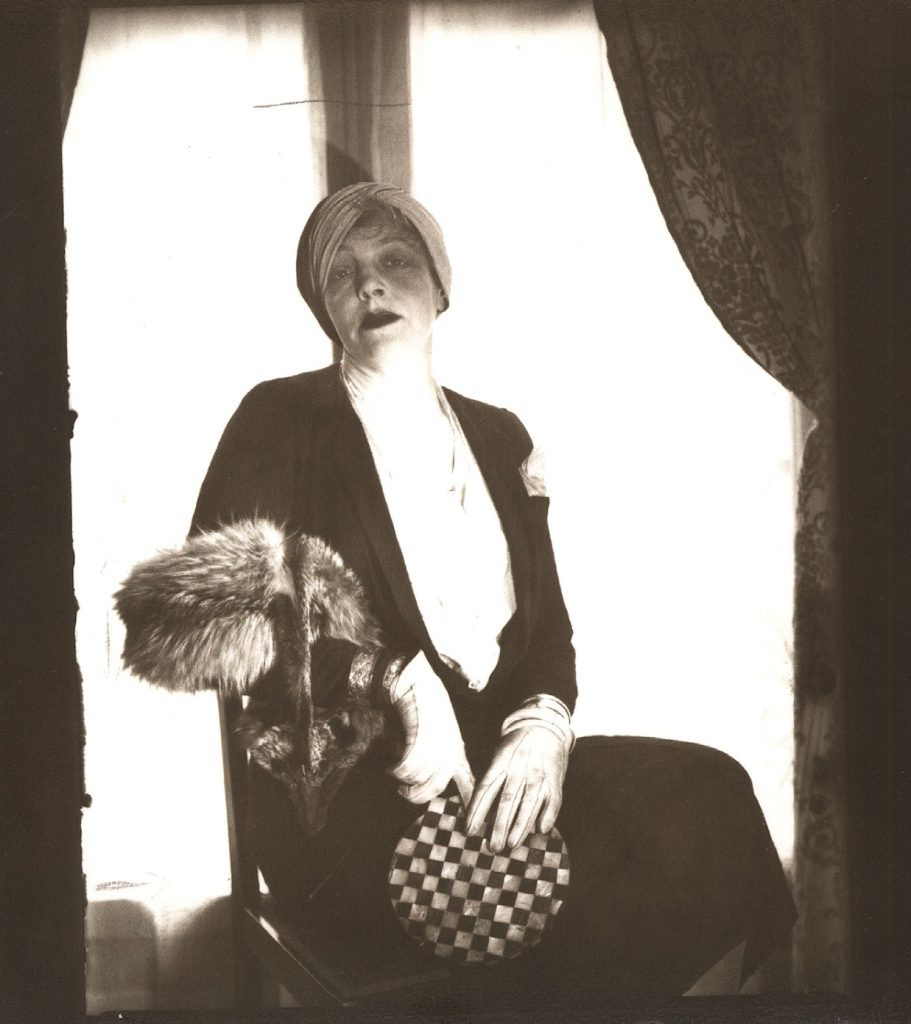
“There are so many things to say about Ulysses […] that these women can be forgotten.”
Clare Hutton
Read Clare Hutton’s interview with Gemma Tipton for The Irish Times (4 February 2022), in which she discusses James Joyce’s lone genius, forgotten female labour, and her forthcoming exhibition at the Harry Ransom Centre.
Curator’s Introduction Released
Marking the moment when James Joyce’s Ulysses turns 100, Dr Clare Hutton (Loughborough University), introduces some of the key ideas, objects, and people featured in the Ransom Center’s centenary exhibition Women and the Making of Joyce’s Ulysses.
This landmark work of literary modernism owes a considerable debt to the silent behind-the-scenes labour of three gay American women: Margaret Anderson, Sylvia Beach, and Jane Heap as well as that of British publisher Harriet Shaw Weaver. What did these women do to facilitate the making of the work? What actually happened on February 2, 1922? Who were the first readers of Ulysses? How did they obtain their copies and what did they make of the book?
To find out more about the exhibition, including location and opening dates, click below.
Women Behind Ulysses Commemorated on St Brigid’s Day
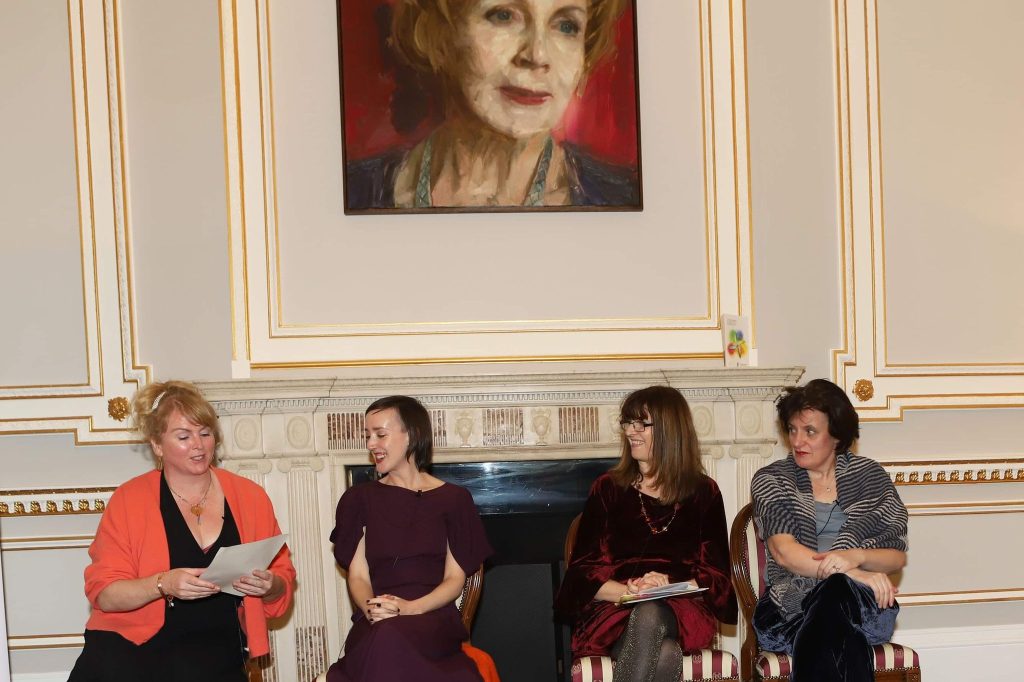
On 1 February 2022, in celebration of Ireland’s great female patron saint, St Brigid, The Embassy of Ireland (London) showcased the efforts of talented Irish women, both historic and contemporary. In one of three fascinating panels upon women in sport, women in climate science, and women and James Joyce, Dr Clare Hutton presented her research into the influence of Joyce’s mother upon the novelist’s success.